
English| EUR
Suggested for you
More currencies
Choose a language
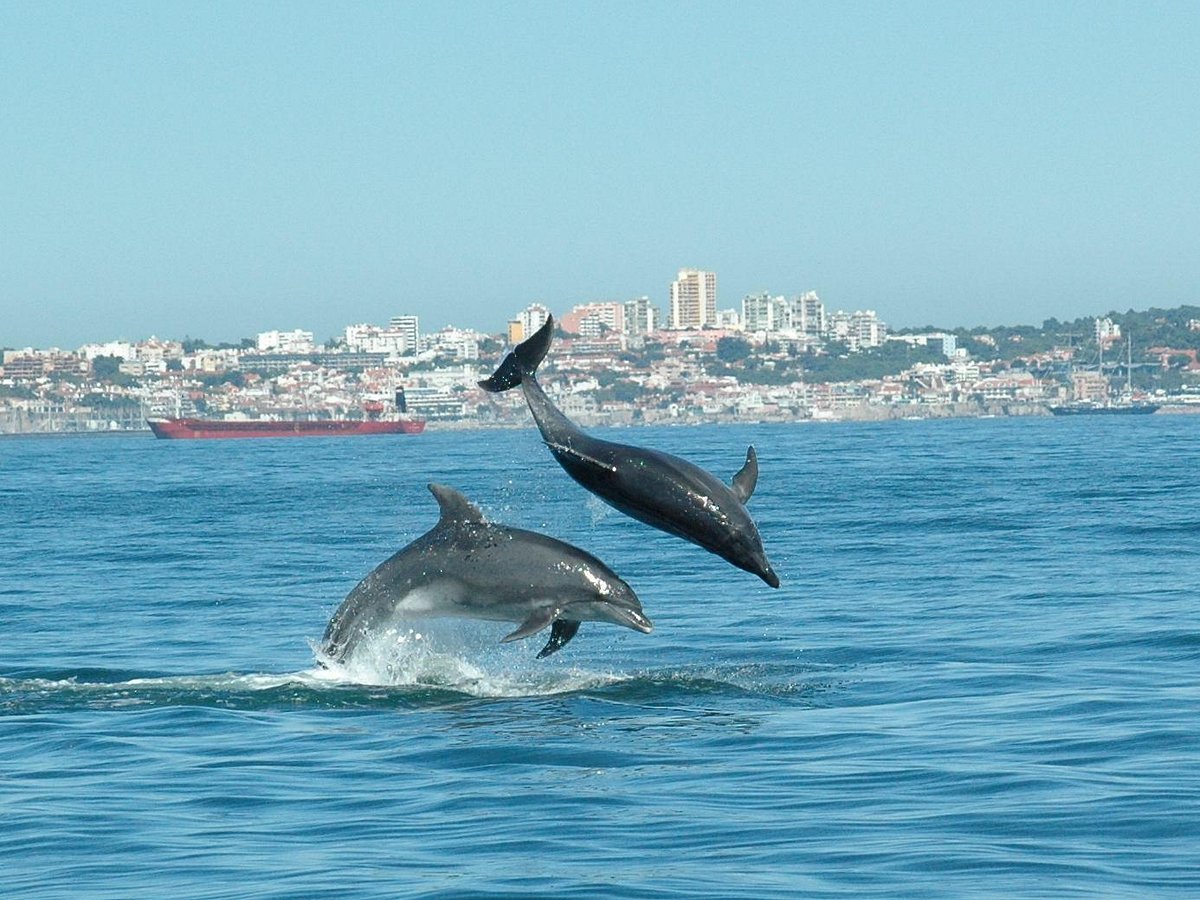
Cascais sits at the convergence of coastal currents that draw three dolphin species to its Atlantic waters. These marine mammals feed in the nutrient-rich upwellings between the town's marina and the Berlengas archipelago. Sightings occur throughout the year, with peak activity tied to prey migration and sea conditions.
Quick answer
Yes, there are dolphins in Portugal, and Cascais waters host three resident species: common dolphins, bottlenose dolphins, and Risso's dolphins. Marine biologists record sightings year-round within 10 nautical miles of Marina de Cascais, with the highest encounter rates between May and October when Atlantic mackerel and sardine schools move closer to shore. Tours departing from the marina between 09:00 and 17:00 report dolphins on approximately 70% of excursions during summer months.
The continental shelf off Cascais drops to 200 meters within three nautical miles of shore, creating the oceanographic conditions that concentrate pelagic fish and the cetaceans that hunt them. Common dolphins—the most frequently sighted species—travel in pods of 20 to 200 individuals, often bow-riding alongside vessels leaving Marina de Cascais. Bottlenose dolphins, smaller groups averaging eight to twelve animals, patrol the rocky coastline between Cascais and Guincho Beach where they target European seabass and mullet. Risso's dolphins, identifiable by their scarred grey bodies and blunt heads, appear less frequently but reliably in deeper waters beyond the 100-meter isobath. Portuguese marine mammal surveys conducted between 2018 and 2025 documented stable populations of all three species, with no seasonal migrations—these are resident animals that adjust their distribution based on prey availability rather than water temperature. The Cascais dolphin watching guide for operators emphasizes that sightings depend on sea state more than season; winds above 15 knots reduce visibility and push dolphins into calmer offshore zones. Marina de Cascais serves as the departure point for marine wildlife excursions, with half a dozen licensed operators maintaining daily schedules from April through October and reduced frequencies in winter. Tours last two to three hours and venture into the designated marine protection corridor extending west toward Cabo da Roca. Calmer morning sea conditions between 09:00 and 12:00 offer better visibility for spotting dorsal fins and surface behavior; afternoon thermal winds pick up by 14:00, creating chop that obscures distant animals. Operators report that dolphins in Portugal coastal waters show higher activity during incoming tides when baitfish congregate near underwater pinnacles and kelp beds. The question of whether dolphins inhabit these waters has a documented answer: three species maintain year-round presence, supported by cold-water upwelling that sustains one of Europe's most productive marine ecosystems. Sightings are probable rather than guaranteed, with success rates highest during months when sea conditions favor both human observation and dolphin foraging close to shore.
“The continental shelf off Cascais creates oceanographic conditions that concentrate pelagic fish and the cetaceans that hunt them.”
Dolphin sightings near Cascais occur year-round, though spring and summer months offer the most consistent conditions. Early hours provide the calmest sea state, which facilitates easier spotting of marine mammals.
Mild, 16°C to 22°C; calm seas
Peak activity aligns with increasing water temperatures. These months offer high visibility for offshore excursions.
Warm, 20°C to 28°C; stable seas
Summer provides reliable weather and steady sightings. Bookings are frequent during this period.
Cooler, 15°C to 20°C; variable seas
Cooler temperatures reduce crowds while dolphin presence remains steady. Sea conditions may vary more than in summer.
—
The best arrival window is 09:00–17:00, with morning hours typically offering calmer sea conditions for dolphin spotting.
Verdict: The best time to visit for sightings is during weekday mornings in late spring or early autumn, arriving within the 09:00–17:00 window.
The Marina de Cascais area is accessible daily to visitors looking to coordinate their dolphin watching departures. The site maintains consistent operational hours throughout the week.
Access to the Marina de Cascais area is free of charge for all visitors. Costs for dolphin watching experiences are managed independently by private tour operators.
Verdict: Entrance to the marina is 0 EUR, while total costs depend entirely on the specific dolphin watching tour selected from private operators.
The Marina de Cascais is located at Marina de Cascais, 2750-800 Cascais, Portugal. It is accessible via the regional train network from Lisbon or by car using the A5 motorway.
CP Cascais Line from Cais do Sodré to Cascais Station
A5 motorway towards Cascais
From Cascais train station to the marina
Visitors should aim for the best arrival window of 09:00–17:00. Arriving within this timeframe ensures you have sufficient time to reach the marina area before your scheduled departure.
Prepare for dolphin-watching tours by securing bookings and packing weather-appropriate gear for variable sea conditions.
Everything you need to know about are there dolphins in portugal
Yes, the Atlantic waters off the coast of Cascais are home to several species of cetaceans. Many visitors ask are there dolphins in Portugal specifically when traveling to this region for marine observation. Sightings often include common, striped, and bottlenose dolphins, which thrive in the nutrient-rich currents near the coastline. Travelers exploring Cascais landmarks often include a boat trip to see these marine mammals in their natural habitat. To ensure the best experience, you should check if there are dolphins in Portugal by monitoring current sea conditions before your visit. The best arrival window is 09:00–17:00, as morning hours typically offer calmer sea conditions for dolphin spotting. Wildlife behavior is unpredictable, so sightings cannot be guaranteed by any operator. While you may wonder are there dolphins in Portugal on any given day, professional skippers use their local expertise to locate pods. Access to the marina area is free, and tours are booked individually with private operators. There is no entrance fee to visit the marina itself, though individual boat tours set their own rates. Please check with local providers for details regarding excursion prices and group bookings. Most dolphin watching excursions are family-friendly and provide an educational experience for children. Ensure your children are prepared for a boat trip and comfortable wearing a life jacket throughout the excursion. Many visitors find that watching marine life is one of the most rewarding parts of their coastal holiday. Prepare for your trip by wearing comfortable clothing, bringing sunscreen, and having a hat for sun protection. Remember to bring a camera to capture images of the Atlantic wildlife you may encounter during your excursion. Arriving at the Marina de Cascais between 09:00 and 17:00 allows you to finalize your arrangements and board your vessel comfortably.